
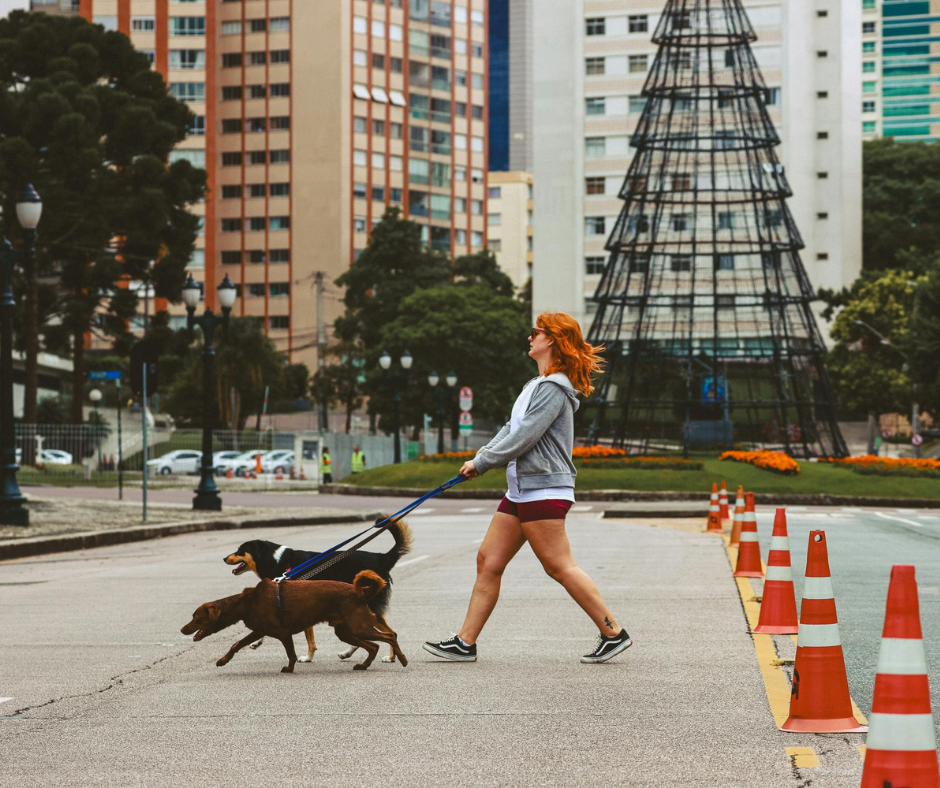
For many dog owners, daily walks feel non-negotiable.
We are often told that a “good” dog owner walks their dog every day, sometimes several times a day. If our dogs are energetic, reactive or struggling with behaviour, we are often encouraged to exercise them even more.
But what if more walks are not always the answer?
Inside Dog Listening, this is one of the most misunderstood conversations we have. We are not saying dogs should never be walked. What we are saying is this:
Sometimes a struggling dog needs less, not more.
And for many owners, that idea brings an enormous sense of relief.
Why Some Dogs Struggle With Walks
Humans often see walks as relaxing and enjoyable. Fresh air, movement, scenery and social connection all make us feel good.
Dogs can experience walks very differently.
For some dogs, leaving the safety of home feels overwhelming. The outside world is full of noise, movement, unfamiliar people, other dogs, bikes, traffic and constant stimulation.
When a dog is already anxious or reactive, daily walks can accidentally keep them stuck in a cycle of stress.
You may notice your dog:
- Barking excessively on walks
- Lunging at dogs, people or vehicles
- Pulling frantically on the lead
- Refusing to go outside
- Constantly scanning the environment
- Struggling to settle afterwards
In these situations, repeatedly exposing a dog to stressful walks can reinforce the very behaviours we are trying to improve.
The Myth of “A Tired Dog Is a Good Dog”
One of the biggest beliefs many owners carry is that exercise fixes behaviour.
We are often told that if we tire a dog out enough, they will finally relax.
But exhaustion is not the same as calmness.
A dog may collapse and sleep after hours of stimulation, yet still remain highly alert, stressed and reactive underneath. Many dogs wake up and immediately return to barking, pacing or hypervigilance because the underlying emotional state has never changed.
Dog Listening focuses on helping dogs feel safe and relaxed, rather than simply worn out.
That is a very different approach.
Sometimes Less Really Is More
One of the most powerful things owners discover is that taking a short break from walks can create noticeable changes very quickly.
When reactive dogs stop rehearsing stressful experiences every day, their nervous systems often begin to settle.
Owners frequently tell us:
“We haven’t really done anything, but my dog already seems calmer.”
That makes sense.
Without constant adrenaline and being overwhelmed, dogs finally have space to decompress.
This is not about avoiding the world forever. It is about pausing long enough for both dog and owner to reset before gradually rebuilding confidence in a calmer way.
Listening to the Dog in Front of You
Dog Listening is never about rigid rules.
Every dog is different.
Some dogs genuinely enjoy relaxed, calm walks every day. Others may need slower steps and more support before they are ready.
The key is learning to observe the dog in front of you.
A calm walk might look like:
- Gentle sniffing
- Loose body language
- Checking back in with you
- Walking at a steady pace
- Relaxed breathing
- Being able to stop and settle easily
A stressed walk often looks very different.
When we start recognising those signals, we can make kinder choices that support our dogs emotionally instead of pushing them through situations they cannot yet cope with.
Letting Go of Guilt
Many owners feel guilty if they skip a walk.
There can be shame attached to the idea of not taking your dog out every day. But forcing an overwhelmed dog into stressful situations does not make you a better owner.
In many cases, slowing down is actually the most compassionate thing you can do.
Small steps lead to big change.
Sometimes progress begins with simply putting the lead on calmly. Sometimes it begins with standing quietly at the front door. Sometimes it begins with taking a complete break for a few days.
It starts with awareness and learning to truly hear what your dog is trying to tell you.
A Kinder Way Forward
If walks currently feel stressful for you or your dog, you are not alone in this.
Instead of asking:
“How do I make my dog cope with more?”
Try asking:
“What would help my dog feel calmer and safer right now?”
That simple shift can change everything.
Dog Listening is not anti-walk. It is pro-understanding, pro-connection and pro-listening to the individual dog.
And often, when dogs finally feel safe, calm walks naturally follow.
Watch the full talk about walking your dog between Kate and Julie here:
Ready to Learn More?
If this conversation resonates with you, here are a few next steps:
- Take the free quiz to discover whether you could become a Dog Listener yourself: https://spdoglisteners.scoreapp.com/
- Explore the accredited Professional Dog Listener qualification: https://spdoglisteners.com/qualification
- Browse more support, guidance and Dog Listening resources: https://spdoglisteners.com/

