
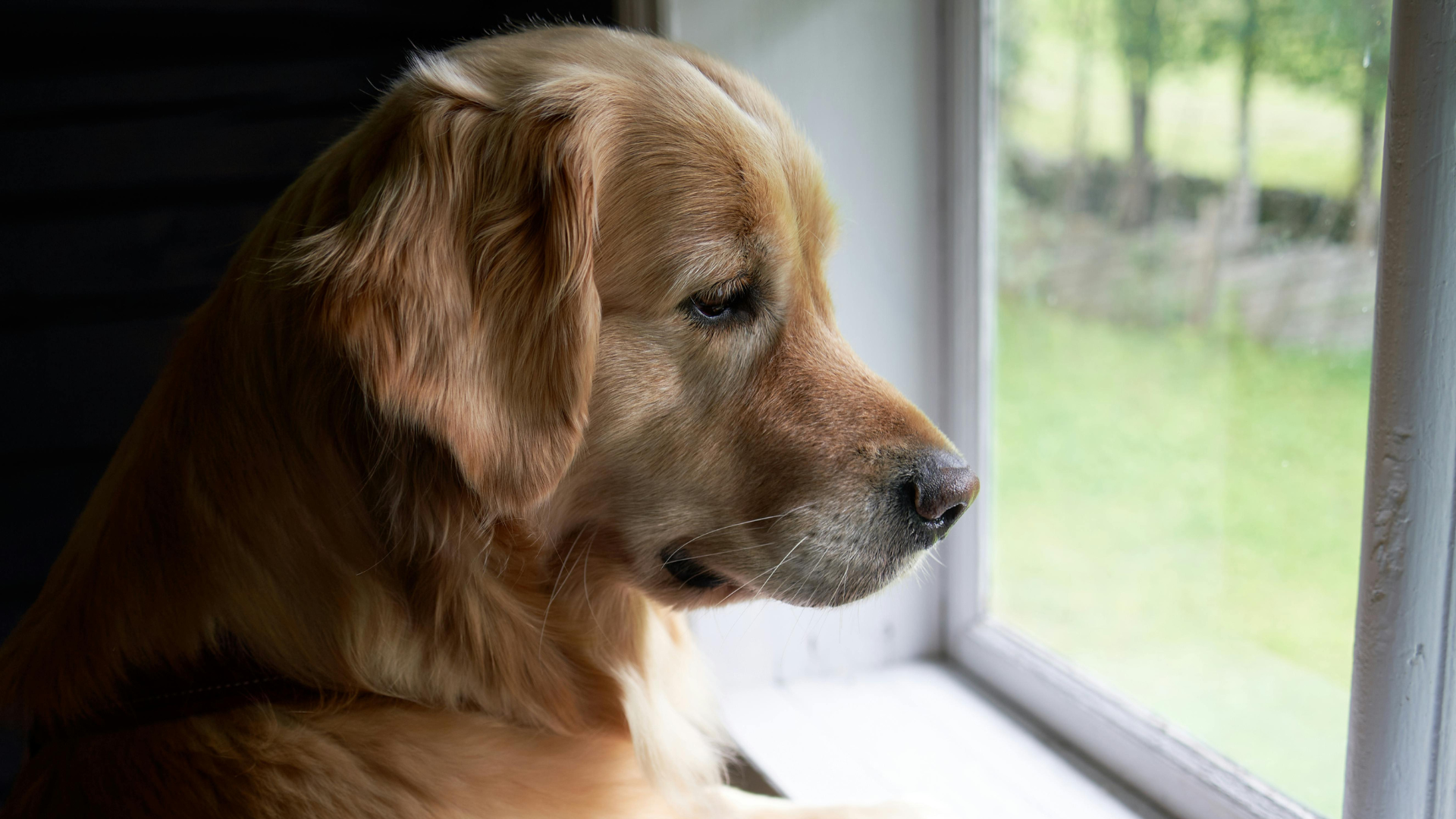
When people think about anxiety in dogs, they often picture the obvious behaviours.
Reactivity on walks.
Barking or lunging at other dogs.
Struggling with recall.
Even aggression.
These are the behaviours that usually prompt people to ask for help.
But in Dog Listening, we often start somewhere much quieter.
Because long before a dog reacts out in the world, there are usually subtle signs of anxiety happening at home.
And when we notice these early signs, something interesting happens: helping the dog becomes much easier.
Let’s take a closer look.
Why Traditional Approaches Often Start Too Late
Traditional dog training often focuses on the big, visible behaviours.
For example:
- Reactivity towards other dogs
- Barking at people or bicycles
- Aggression or frustration on walks
But by the time a dog is reacting like this, their nervous system is already highly activated.
In that state, the dog isn’t really able to listen or learn.
Their body is running on adrenaline.
Trying to help a dog in that moment can feel frustrating for both the dog and the owner.
That’s why Dog Listening often takes a different approach.
Instead of starting with the big behaviours, we start in the home, where the dog is calmer and more able to process new information.
The Quiet Signs of Anxiety in Dogs
Many anxious behaviours are surprisingly subtle.
In fact, some of them are things people often describe as “normal” dog behaviour.
But when we look a little closer, we sometimes see something different.
Here are three common signs.
1. Following You From Room to Room
Many dog owners experience this.
You stand up from your desk… and your dog immediately gets up too.
You walk into the kitchen… they follow.
You go upstairs… they come along.
At first, this can feel sweet. It’s often interpreted as loyalty or affection.
But sometimes it’s actually a sign that your dog feels responsible for you.
In other words, they may feel they need to keep an eye on things all the time.
That constant sense of responsibility can create underlying anxiety.
2. Constantly Asking to Play
Another surprising sign of anxiety is relentless play-seeking.
Some dogs:
- Nudge you repeatedly
- Bring toys over and over again
- Drop a ball in your lap all day long
- Climb onto you for interaction
Many people assume this means their dog simply has lots of energy.
But sometimes the dog is actually struggling to switch off and relax.
Play becomes a way to release nervous energy.
3. A Dog Who Can’t Settle
One of the most common things people say is:
“My dog just doesn’t have an off switch.”
The dog seems to be on the go all day.
They pace, watch everything, and rarely relax fully.
In rescue environments, this is something that comes up again and again when people feel overwhelmed with their dog’s behaviour.
What’s often happening is that the dog’s nervous system never fully settles.
And when a dog is in that state constantly, even small things can tip them into reactive behaviour.
Why Starting at Home Makes Such a Difference
When we begin working with these subtle signs at home, something important starts to shift.
Through small changes in our behaviour, we begin communicating something powerful to the dog:
“You don’t need to manage everything.”
“We’ve got this covered.”
“You can relax.”
Over time, the dog receives this information repeatedly in calm situations.
They begin to realise they don’t need to stay alert all day.
And as their nervous system settles, something else happens.
Their tolerance increases.
Just like humans, when we’re rested and calm, we cope with things much better.
A dog who feels calmer at home is far more able to cope with the outside world too.
One Simple Action That Can Help an Anxious Do
Dog Listening is a complete approach with many elements.
But if there was one small action that could help many anxious dogs, it would be this:
Reduce your eye contact.
This often surprises people.
But direct eye contact is actually very stimulating for dogs.
For them, eye contact often means:
“What do you want from me?”
“What should I do next?”
“I’m ready.”
In other words, it activates their nervous system.
If a dog is already feeling a little anxious, frequent eye contact can unintentionally keep them in a heightened state.
By softening or reducing eye contact, we give the dog a signal that nothing is required from them right now.
And that can help their nervous system settle.
The Two Moments When This Matters Most
There are two times in particular when reducing eye contact can make a big difference.
When You Leave the House
As you prepare to leave, try avoiding eye contact with your dog.
Simply go about what you’re doing calmly and quietly.
This prevents building unnecessary excitement or anticipation.
When You Return Home
The same applies when you come back.
Instead of greeting your dog with lots of eye contact and excitement, enter the home calmly and allow the energy to settle first.
This can help prevent the emotional spikes that sometimes contribute to anxiety.
Small Changes Can Create Big Shifts
What’s powerful about these small adjustments is that they are simple, repeatable signals.
Every day, your dog receives the same message:
You don’t need to manage everything.
You don’t need to stay on high alert.
It’s safe to relax.
Over time, these small signals can create surprisingly big shifts in how a dog feels.
And when the nervous system settles, many of the bigger behaviours outside the home often begin to soften too.
Curious About Learning Dog Listening?
If you’d like to explore this approach further, here are a few next steps:
- Take the free quiz: Could you be a Professional Dog Listener?
https://spdoglisteners.scoreapp.com/ - Explore the Level 1 course – The Art of Dog Listening
https://spdoglisteners.com/level-1 - Or learn more about becoming a qualified Professional Dog Listener
https://spdoglisteners.com/qualification
Helping dogs begins with understanding them.
And sometimes the most powerful place to start… is with the quietest signs.

